Terms You Should Know When Starting Gum Disease Treatment
Posted on 3/16/2026 by Amir Hosseini, DDS |
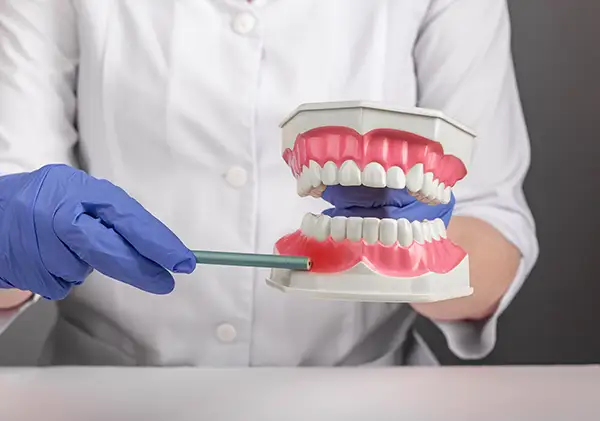 Starting gum disease treatment can feel like learning a new language. There are a lot of words that might sound confusing. But understanding these terms will help you take charge of your oral health and work effectively with your dental team. Let’s break down some key terms you should know. Starting gum disease treatment can feel like learning a new language. There are a lot of words that might sound confusing. But understanding these terms will help you take charge of your oral health and work effectively with your dental team. Let’s break down some key terms you should know.
# Gum Disease and Periodontal Disease
You might hear these two terms used interchangeably, and that's perfectly okay. Gum disease, also known as periodontal disease, is an infection that damages the soft tissues and bone that support your teeth. It starts with inflammation of the gums (gingivitis) and, if left untreated, can progress to periodontitis, a more severe form that can lead to tooth loss. Think of "periodontal" as relating to the area around your teeth, and "gum" as relating to the soft tissue that protects your teeth.
# Plaque and Tartar
Plaque is a sticky film of bacteria that constantly forms on your teeth. These bacteria feed on sugars and starches in the food we eat, producing acids that attack tooth enamel and irritate the gums. If plaque isn't removed through daily brushing and flossing, it hardens into tartar (also called calculus). Tartar is like a super-glued version of plaque that can only be removed by a dental professional. Both plaque and tartar contribute to gum disease.
# Gingivitis and Periodontitis
Gingivitis is the early stage of gum disease. The gums become red, swollen, and may bleed easily, especially when brushing or flossing. At this stage, the damage is still reversible with good oral hygiene and professional cleaning. Periodontitis, on the other hand, is a more advanced stage. The inflammation spreads below the gum line, damaging the bone and tissues that hold teeth in place. Pockets form between the teeth and gums, which trap more bacteria and debris, leading to further bone loss and eventually tooth loss.
# Probing Depths and Pocket Reduction
When you visit the periodontist, they'll use a small instrument to measure the space between your teeth and gums. This measurement is called the probing depth. Healthy gums have shallow probing depths (usually 1-3 millimeters). Deeper pockets (4 millimeters or more) indicate gum disease. Pocket reduction is a type of treatment aimed at decreasing the size of these pockets, making it easier to keep the area clean and prevent further bone loss.
# Scaling and Root Planing
Scaling and root planing, often called a "deep cleaning," is a non-surgical treatment to remove plaque and tartar from below the gum line. Scaling involves removing the plaque and tartar from the tooth surfaces, while root planing smooths the root surfaces to prevent bacteria from easily sticking to them. This helps the gums heal and reattach to the teeth.
# Prevention is Key
While knowing these terms helps with understanding treatment, remember that the best approach is prevention! Regular brushing, flossing, and professional cleanings are essential for keeping your gums healthy and preventing gum disease from developing in the first place. Consistent and effective oral hygiene is the best defense against gum disease.
# Maintenance
Once gum disease is treated, it's crucial to maintain your oral health. This usually involves more frequent check-ups and cleanings to monitor the gums and prevent the disease from returning. Think of maintenance as ongoing care to protect the investment you've made in your oral health.
# Treat to Protect
Understanding these terms will empower you to actively participate in your gum disease treatment and work with your dental professional. Remember, treating gum disease effectively is an investment in your overall health and well-being. Don't hesitate to ask questions and seek clarification on anything you don't understand. Good oral health contributes to a happier, healthier you!
|
|