How Dental Implants Can Save the Integrity of the Jaw
Posted on 6/15/2026 by Amir Hosseini, DDS |
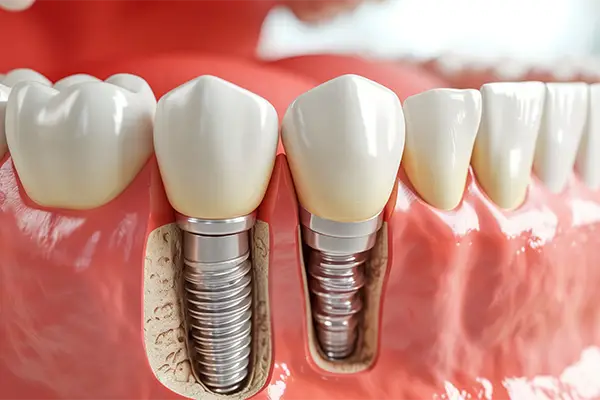 Losing a tooth can feel like just a cosmetic problem at first. However, the consequences can extend far beyond a gap in your smile. One of the most significant issues is the impact it has on your jawbone. Think of your jawbone as the foundation for your teeth. When a tooth is lost, that foundation starts to weaken. Let's explore how dental implants, a key part of restoration dentistry, can help protect and even rebuild that foundation. Losing a tooth can feel like just a cosmetic problem at first. However, the consequences can extend far beyond a gap in your smile. One of the most significant issues is the impact it has on your jawbone. Think of your jawbone as the foundation for your teeth. When a tooth is lost, that foundation starts to weaken. Let's explore how dental implants, a key part of restoration dentistry, can help protect and even rebuild that foundation.
The Jawbone and Tooth Connection
Your teeth aren't just sitting in your gums. They are firmly rooted in your jawbone. When you chew, the pressure from biting and grinding stimulates the bone around the tooth root. This stimulation is crucial for maintaining bone density and strength. When a tooth is missing, that stimulation disappears in that area. Without it, the bone begins to resorb, meaning it breaks down and shrinks away. This bone loss can lead to several problems:
| • |
Changes in Facial Structure: The jawbone supports your facial features. Bone loss can cause your face to look sunken or aged. |
| • |
Difficulty Chewing and Speaking: As bone diminishes, it can affect the stability of surrounding teeth, making it harder to chew and speak properly. |
| • |
Shifting Teeth: Neighboring teeth may shift into the empty space, causing misalignment and bite problems. |
Dental Implants: A Solution Rooted in Science
Dental implants offer a long-term solution for missing teeth that goes beyond just filling the gap. They are designed to act like natural tooth roots. A dental implant is a small, biocompatible post, usually made of titanium, that is surgically placed into the jawbone. Over time, the bone fuses to the implant in a process called osseointegration, creating a strong and stable foundation.
How Implants Preserve the Jawbone
Unlike other tooth replacement options, dental implants provide the necessary stimulation to the jawbone, preventing further bone loss. Here’s how:
| • |
Stimulation: The implant transfers chewing forces directly to the jawbone, mimicking the function of a natural tooth root. This stimulation helps maintain bone density and prevents resorption. |
| • |
Support: The implant provides a stable base for a crown, bridge, or denture, ensuring proper bite and chewing function. This added support protects remaining natural teeth. |
| • |
Long-Term Solution: With proper oral care, dental implants can last for many years, providing continuous bone stimulation and preventing long-term bone loss. |
Taking Care of Your Investment
Just like natural teeth, dental implants require diligent oral care. This includes:
| • |
Brushing and Flossing: Regular brushing and flossing are essential for removing plaque and bacteria around the implant and preventing gum disease. |
| • |
Regular Check-ups: Routine dental visits allow your dentist to monitor the health of your implant and surrounding tissues. |
| • |
Professional Cleanings: Professional cleanings remove hardened plaque and tartar that can’t be removed with brushing and flossing alone. |
Restoration Dentistry: More than Just a Smile
Dental implants are an important part of restoration dentistry because they offer more than just a pretty smile. They play a vital role in preserving the integrity of your jawbone, maintaining facial structure, and improving overall oral health. If you’re considering tooth replacement options, explore how dental implants might be the best choice for your long-term health and well-being.
|
|